Skip to content
A little charge. A world of possibilities.
NewsContact usLog inSign up ↗
EV-Lectric
Plan a TripEV DriversBusinessEV GearResourcesCompany
Find a charger
EV-Lectric

A little charge. A world of possibilities. Find your next charging stop, get to know your EV, and enjoy the road ahead.

Drivers

Find ChargersHow It WorksEV GearGuidesNews

Businesses

For BusinessesAdvertiseList Your ChargerAboutContact

Legal

Privacy PolicyTerms of ServiceCookie PolicyAffiliate DisclosureData Sources

Account

My DashboardSign InCreate Account

As an Amazon Associate, EV-Lectric earns from qualifying purchases. Some links on this site are affiliate links — see our affiliate disclosure.

© 2026 EV-LectricCharging data by Open Charge Map ·
Home/Guides/Level 1 vs Level 2 vs DC Fast Charging
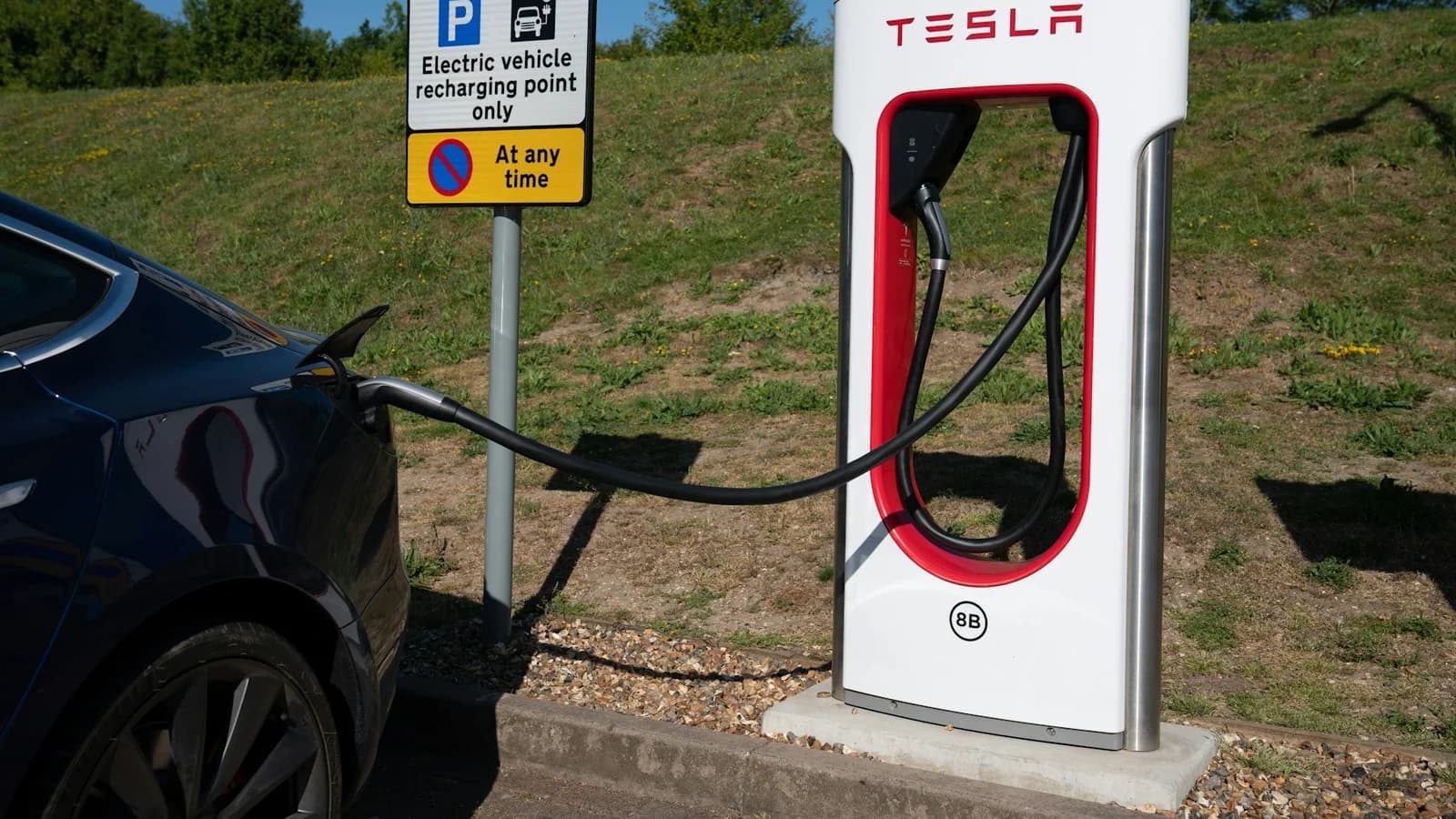
A Tesla connected to a Supercharger beside an EV charging bay sign.
Photo by Autotrader UK on Unsplash
Charging BasicsJuly 3, 20266 min read

Level 1 vs Level 2 vs DC Fast Charging

Charging levels sound technical but map to something simple: how many miles of range you gain per hour plugged in. Here's what each level really delivers and when to use it.

Level 1 — the wall outlet (3–8 km of range per hour)

Level 1 is a standard household outlet: 120 V in North America, typically delivering about 1.4–1.9 kW. That adds roughly 3–8 km of range per hour — slow, but if you drive under 60 km a day and park at home overnight, it can genuinely cover a short commute. It requires no installation at all.

The catch: recovering from a near-empty battery takes days, and in cold weather some of that trickle goes to warming the battery, cutting the effective rate further. Many owners who start on Level 1 eventually upgrade once their driving grows or winter arrives. (Outside North America, a standard 230 V outlet delivers somewhat more power, but the same slow-charging logic applies.)

Level 2 — the home upgrade (30–90 km of range per hour)

Level 2 runs on 240 V in North America (like a dryer circuit) and typically delivers about 7–11.5 kW at home, with the J1772 standard allowing up to 19.2 kW. Your car's onboard charger sets the real ceiling. A typical 32–48 amp installation refills most EVs overnight from a low state of charge.

For most drivers with off-street parking, this is the biggest quality-of-life upgrade in EV ownership. Hardwired 48 A units charge fastest; plug-in 32–40 A units on a 50 A outlet are simpler and portable if you move. Either way, hire a licensed electrician and check utility and state programs — many utilities offer rebates or special EV rates. (In the US, the federal 30C tax credit for home charging equipment ended for equipment placed in service after June 30, 2026.)

In Europe, the equivalent is single-phase 230 V charging at up to about 7.4 kW, or three-phase charging at 11 or 22 kW where the home supply and the car support it.

DC fast charging — the road-trip tool (roughly 50–350+ kW)

DC fast charging bypasses your car's onboard charger and feeds the battery directly. Stations range from older 50 kW units to 150–350 kW hubs, and a few newer sites advertise even higher output — but your car's maximum charging rate and battery temperature decide what you actually get. On a capable car, a 20–40 minute session can add a few hundred kilometers. It's built for travel more than daily use: charging slows markedly as the battery fills (usually past about 80%), and per-kWh prices are often several times what you'd pay at home.

The efficient pattern: arrive low (10–20%), charge to 60–80%, and leave. Two shorter sessions beat one long one.

The practical mix

  • Daily driving: for owners with home or workplace access, Level 2 can handle nearly all routine charging, leaving fast charging for trips.
  • Apartment dwellers: workplace Level 2 or a weekly DC fast session both work — check the locator for chargers near places you already spend time.
  • Road trips: plan DC fast stops at 10–20% arrival state of charge, and treat Level 2 destination charging at hotels as overnight range (sometimes free for guests, sometimes billed — ask when booking).
FAQ

Common Questions

Does frequent DC fast charging damage the battery?

Modern battery management systems are designed to handle regular fast charging, and occasional sessions are not a concern. Heavy reliance on DC fast charging, especially in hot weather or to high states of charge, is generally thought to add some extra wear over time — so if you have home charging, it's sensible to use it for daily needs. Your manufacturer's guidance is the best reference for your specific car.

Is Level 1 charging ever enough?

Yes — for short commutes with reliable overnight parking, 10–12 hours on Level 1 typically replaces roughly 40–80 km of driving, depending on the car and the weather. It stops being enough when your daily distance grows or when winter slows the effective charge rate.

Recommended Gear

Gear That Pairs With This Guide

As an Amazon Associate, EV-Lectric earns from qualifying purchases.

Lectron Level 2 J1772 Charger (WiFi Version)
Chargers

Lectron Level 2 J1772 Charger (WiFi Version)

A portable Level 2 charger for drivers who want app-connected home charging without a permanent wall-box install.

Price on AmazonView product
EVIQO Level 2 NACS Charger Compatible with Tesla
Chargers

EVIQO Level 2 NACS Charger Compatible with Tesla

A Tesla-ready home charger for NACS drivers who want a clean Level 2 setup without relying on adapters.

Price on AmazonView product
EVIQO EV Charger Level 2 48 Amp Hardwired Station
Chargers

EVIQO EV Charger Level 2 48 Amp Hardwired Station

A higher-output home charging station aimed at drivers who want a more permanent garage setup with strong daily charging capacity.

Price on AmazonView product
Keep Reading

Related Guides

A charging pedestal and parked electric car outside a residential building.Charging Basics

EV Charging at Apartments and Condos

How to own an EV without a garage: building charging strategies, talking to landlords and HOAs, right-to-charge laws, and public charging routines that work.

Read guide
A driver using charging equipment beside an electric car at a public station.Charging Basics

What to Do If a Charger Is Broken

A field guide for failed charging stops: quick fixes worth trying, how to report broken chargers, and how to plan so one dead station never strands you.

Read guide
An electric car connected to a blue charging cable on a city street.Charging Basics

How to Find EV Chargers Near You

A practical walkthrough of finding reliable EV charging stations near you — filters that matter, reading station details, and avoiding dead chargers.

Read guide